Understanding how quickly water moves through different soils is a core concept in earth science. Sandy soils let water flow fast, while clay holds it longer. This hands‑on experiment lets children test the statement themselves, develop measurement skills, and see the science behind soil texture.
Overview
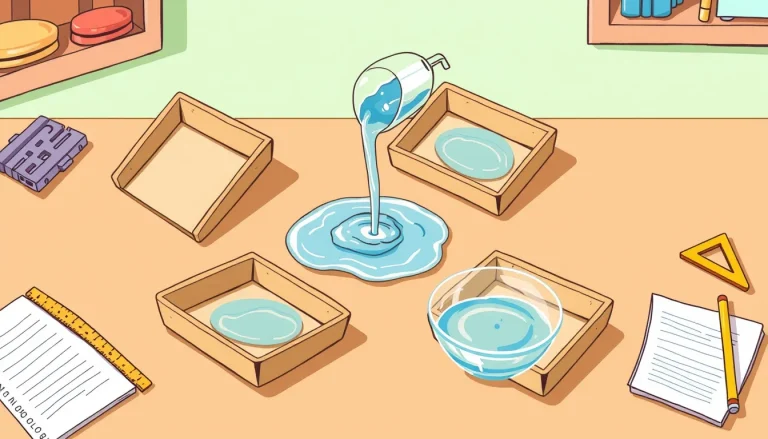
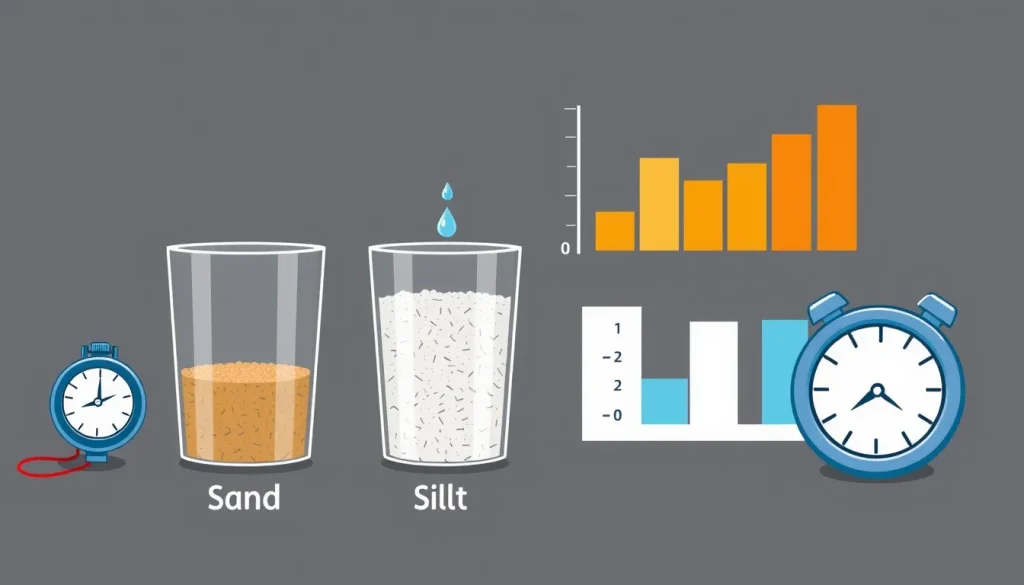
In this experiment you will fill three identical clear cups with three common soil textures – sand, silt (represented by flour), and clay – then pour the same amount of water into each cup. By timing how long it takes for the water to disappear (drain or be absorbed), you can rank the soils from fastest to slowest drainage.
Before You Begin
- Choose a flat, level surface such as a kitchen counter or a tabletop.
- Gather all materials before starting; this reduces interruptions and keeps timing accurate.
- Adult supervision is needed for handling the measuring cup and for cleaning up any spilled water.
Materials
- Three identical clear plastic cups or small jars (e.g., 250 mL each)
- Sand – clean play‑sand or garden sand
- Flour – plain all‑purpose flour works as a silt substitute (fine particles)
- Clay – garden clay soil or bentonite clay powder (available at craft stores)
- Water – room‑temperature tap water
- Measuring cup (milliliter markings) or a kitchen scale
- Timer or stopwatch (smartphone timer works)
- Ruler or permanent marker for labeling cups
- Notebook or worksheet for recording times
- Paper towels for cleanup
Testable Question
Which of the three soil types (sand, silt, clay) allows a given volume of water to drain the fastest?
Hypothesis
Because sand particles are large and create big pores, the sand cup will drain water faster than the silt (flour) cup, and the clay cup will be the slowest.
Variables and Controls
- Independent variable: Soil type (sand, silt, clay)
- Dependent variable: Time (seconds) for the water to disappear from the cup
- Controlled variables:
- Amount of water (e.g., 100 mL per trial)
- Volume of soil in each cup (fill to the same depth, e.g., 5 cm)
- Cup size and shape
- Room temperature and humidity (conduct trials in the same room)
Procedure
- Label the three cups “Sand,” “Silt,” and “Clay.”
- Fill each cup with its designated soil to a depth of 5 cm. Tap gently to settle the soil, but do not compress it.
- Using the measuring cup, pour exactly 100 mL of water into the first cup (e.g., Sand). Start the timer the moment the water contacts the soil surface.
- Observe the water. When no visible water remains on the surface (it has either drained into the soil or evaporated), stop the timer and record the time in seconds.
- Allow the cup to dry completely (or gently blot excess water with a paper towel) before the next trial.
- Repeat steps 3‑4 for the Silt cup, then for the Clay cup, completing one full set of trials.
- Perform at least three full sets (i.e., three repeats) to obtain reliable data.
- After all trials, calculate the average time for each soil type.
What to Observe or Measure
Record the following for each trial:
- Soil type
- Trial number
- Time (seconds) until water disappears
Use the data table below to keep your observations organized.
Repeated Trials
Repeating the experiment reduces random error (e.g., slight differences in how the soil settles). An average of three trials is sufficient for a clear pattern, but more repeats increase confidence.
Data Table
| Soil Type | Trial # | Time (seconds) |
|---|---|---|
| Sand | 1 | |
| Sand | 2 | |
| Sand | 3 | |
| Silt (Flour) | 1 | |
| Silt (Flour) | 2 | |
| Silt (Flour) | 3 | |
| Clay | 1 | |
| Clay | 2 | |
| Clay | 3 |
Graphing Your Results
After calculating average times, create a simple bar graph:
- X‑axis: Soil type (Sand, Silt, Clay)
- Y‑axis: Average drainage time (seconds)
- Each bar shows the mean time; error bars can represent the range of your three trials.
Visual comparison makes it easy to see which soil drains fastest.
The Science Explained
Soil is made up of particles of three sizes – sand, silt, and clay – each influencing how water moves through the ground. Large sand particles create big pores, allowing water to flow quickly but also to drain away rapidly. Very fine clay particles pack tightly, creating tiny pores that hold water for a long time. Silt (or flour in our model) falls in between, with moderate drainage speed. This relationship is described in basic soil‑texture science and is why sandy soils dry out faster than clay soils [1]. Poor drainage in clay can lead to waterlogged conditions, while fast‑draining sand can leave plants thirsty [3].
Troubleshooting
- Water never disappears: The cup may be sealed or the soil compacted too much. Lightly tap the cup to settle the soil without compressing.
- Times vary wildly between trials: Ensure the water volume is exactly the same each time and that the soil depth is consistent.
- Evaporation affecting results: Conduct the experiment in a short time frame (under 10 minutes) and keep the room temperature stable.
Cleanup and Disposal
Pour the used sand and clay into a garden bed or discard in a trash bag. Flour can be swept into a compost bin. Wipe the cups with a damp paper towel and let them dry before storing.
Next Steps
Try extending the investigation by:
- Testing how adding organic matter (e.g., compost) changes drainage.
- Measuring how quickly a plant seed germinates in each soil after the drainage test.
- Using a larger volume of water to see if the ranking stays the same.
Frequently asked questions
Do I need real silt for the experiment?
Real silt is difficult to collect, but plain flour has a similar fine particle size and works well as a substitute.
Can I use the same cup for all three soils?
Yes, as long as you clean the cup thoroughly between trials to avoid cross‑contamination.
What if my sand is wet already?
Dry the sand on a paper towel before filling the cup, or let it air‑dry for a few hours.
Related terms
- Soil texture
- The proportion of sand, silt, and clay particles in a soil, which determines its physical behavior.
- Pore space
- The tiny gaps between soil particles that hold air and water.
- Drainage rate
- How quickly water moves through soil, measured by time for water to disappear.
Sources & references
- The important role of soil texture on water – Crops and Soils, https://cropsandsoils.extension.wisc.edu/articles/the-important-role-of-soil-texture-on-water/
- Testing and Improving Soil Drainage | Yard and Garden, https://yardandgarden.extension.iastate.edu/how-to/testing-and-improving-soil-drainage