Overview
Radishes grow quickly, making them perfect for short‑term garden investigations. The question we’ll test is: Does adding compost to a potting mix increase the amount of radish harvested? By comparing three simple growing media – pure soil, pure compost, and a 50/50 soil‑compost blend – children can see how organic matter influences plant health.
Before You Begin
- Workspace: A sunny windowsill, balcony, or indoor grow‑light area with a flat surface for pots.
- Adult supervision: Needed for handling sharp tools, weighing compost, and ensuring consistent watering.
- Safety: Wash hands after handling soil or compost; avoid inhaling dust.
Materials
| Item | Typical amount |
|---|---|
| Radish seeds (Raphanus sativus) | 1 packet (≈ 100 g) |
| Potting soil (commercial or garden soil) | 3 L |
| Compost (well‑decomposed kitchen or garden compost) | 3 L |
| Cardboard containers (e.g., cereal boxes) cut to 10 cm depth | 6 pieces |
| Paper cups (for seed‑starting) | 12‑18 |
| Water (room‑temperature) | as needed |
| Ruler or measuring tape | 1 |
| Kitchen scale (optional, for fresh weight) | 1 |
| Notebook or worksheet for data | 1 |
| Label stickers or markers | 6 |
All items are household‑common; compost can be homemade or purchased.
Testable Question
Does adding compost to a potting mix increase the yield (number and weight) of radishes grown in identical containers?
Hypothesis
Because compost supplies additional nutrients and improves water‑holding capacity, the mixed soil‑compost treatment will produce more radishes and heavier roots than soil‑only or compost‑only pots.

Variables and Controls
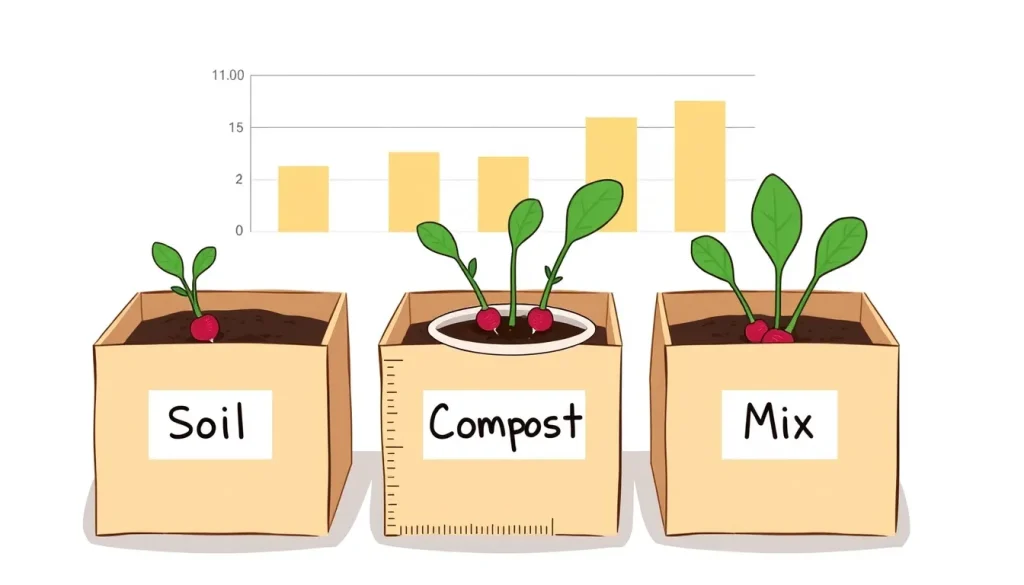
- Independent variable: Growing medium – three levels (100 % soil, 100 % compost, 50 % soil + 50 % compost).
- Dependent variables: (a) Number of radishes harvested per pot, (b) Total fresh weight of radishes per pot, (c) Average root length.
- Controlled variables: Seed variety, seed density (3 seeds per cup), pot size, watering schedule (water to keep soil moist but not soggy), light exposure (≈ 6 h of direct sunlight or equivalent grow‑light), temperature (≈ 18‑22 °C), and duration of growth (harvest at 28 days).
Repeated Trials
To account for natural variation, set up three replicate pots for each treatment (total = 9 pots). More replicates improve confidence but increase space and time.
Step‑by‑Step Procedure
- Prepare containers: Cut cardboard boxes to a uniform depth of 10 cm. Line each with a paper cup (bottom side up) to hold the growing medium.
- Label pots: Use stickers or a marker to mark each pot with its treatment code – S (soil), C (compost), or M (mix).
- Mix media:
- For S pots, fill the cup with plain potting soil.
- For C pots, fill with compost only.
- For M pots, combine equal volumes of soil and compost, mix thoroughly, then fill.
- Sow seeds: Make a shallow notch (≈ 1 cm deep) in the medium, place 3 radish seeds, and cover lightly with a thin layer of the same medium.
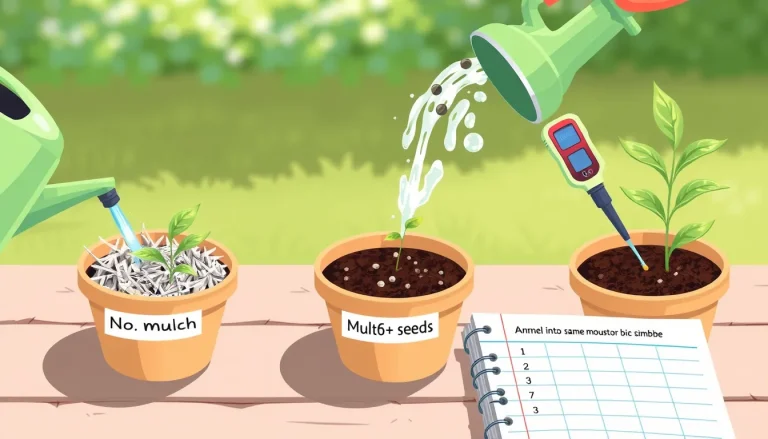
- Water gently: Use a spray bottle or a small watering can to moisten each cup until water drains from the bottom. Keep the medium consistently moist throughout the experiment.
- Provide light: Place pots on a sunny windowsill or under a grow‑light for at least 6 hours daily.
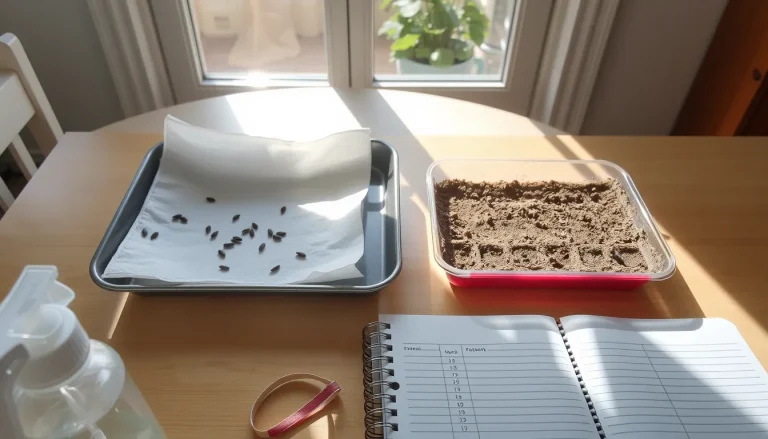
- Record daily: Note germination dates, any wilting, and watering amounts in the notebook.
- Harvest: After 28 days (or when radish tops are ~ 5 cm tall), gently pull each radish, trim the greens, and record:
- Number of radishes per pot.
- Fresh weight (g) using a kitchen scale.
- Root length (cm) with a ruler.
- Clean up: Dispose of spent compost in a garden bed or compost bin; recycle cardboard.
What to Observe or Measure
- Germination rate: How many seeds sprout in each pot.
- Growth speed: Days from sowing to visible radish tops.
- Yield: Total number of radishes and cumulative fresh weight per pot.
- Root quality: Length and visual health (color, firmness).
Data Table (Blank)
| Trial | Treatment | Germinated Seeds | Harvest Day | # Radishes | Total Fresh Weight (g) | Avg Root Length (cm) |
|---|---|---|---|---|---|---|
| 1 | ||||||
| 2 | ||||||
| 3 | ||||||
| 4 | ||||||
| 5 | ||||||
| 6 | ||||||
| 7 | ||||||
| 8 | ||||||
| 9 |
Fill in the table as you collect data. The three treatment codes are S = soil only, C = compost only, M = mix.
Graphing Your Results
A simple bar graph works well:
- X‑axis: Treatment (S, C, M).
- Y‑axis: Average total fresh weight per pot (grams) or average radish count.
- Each bar represents the mean of the replicate pots; error bars can show the range.
Graphing helps visualise whether the mixed medium outperforms the others.
The Science Explained
Compost is decayed organic material rich in nutrients such as nitrogen, phosphorus, and potassium, plus beneficial microbes. These microbes break down remaining organic matter, releasing nutrients in forms plants can absorb. Compost also improves soil structure, increasing water‑holding capacity while still allowing excess water to drain. In radish trials, researchers have found that any amount of compost improves growth compared with a no‑compost control, though differences among 25 %, 50 %, and 100 % compost levels were often small (Source 3). A junior study in Portugal reported that higher compost concentrations (up to 40 %) and the inclusion of worm castings gave the best radish quality (Source 4). The “Raising Radishes” classroom lesson also uses a soil‑only, compost‑only, and mixed treatment to let students see these effects firsthand (Source 1).
Because radishes mature quickly, differences in nutrient availability become evident within a month. If your mixed pots produce heavier, longer roots, the hypothesis is supported; if not, the result shows that radish growth is tolerant of a wide range of organic matter levels.
Worked Example (Illustrative Numbers)
Below is a hypothetical set of results to show how to interpret data. Do not treat these as actual experimental outcomes.
| Treatment | Avg # Radishes | Avg Fresh Weight (g) | Avg Root Length (cm) |
|---|---|---|---|
| Soil only (S) | 8 | 64 | 6.5 |
| Compost only (C) | 9 | 71 | 7.0 |
| Mix 50/50 (M) | 11 | 88 | 8.2 |
In this example the mixed medium yields the most radishes and the greatest total weight, supporting the hypothesis.
Troubleshooting
- Uneven watering: If some pots stay soggy while others dry out, radish size will vary. Use a spray bottle for consistent moisture.
- Pest or mold growth: Remove affected leaves promptly; improve air circulation.
- Compost odor or heat: Use well‑aged compost; fresh compost can burn seedlings.
- Insufficient light: Leggy, pale seedlings indicate a light deficiency; move pots to a brighter spot.
Next Steps
- Test other compost percentages (25 %, 75 %).
- Compare different compost types (kitchen waste vs worm castings).
- Extend the experiment to other fast‑growing vegetables such as lettuce or carrots.
- Calculate the cost‑benefit of using compost versus buying commercial seed‑starting mix.
Cleanup and Disposal
Discard used paper cups in recycling, return cardboard boxes to the recycling bin, and add spent compost to a garden bed or a municipal compost program. Wash hands thoroughly after handling soil or compost.
Related terms
- Compost
- Decomposed organic material that adds nutrients and improves soil structure.
- Potting mix
- A blend of soil, compost, and sometimes perlite or peat used for growing plants in containers.
- Yield
- The amount of product harvested, measured here by number of radishes and total fresh weight.
Sources & references
- Raising Radishes lesson, Center for Ecoliteracy, 2018. https://www.ecoliteracy.org/sites/default/files/media/cel-raising-radishes-lesson-grades3-5.pdf
- Effect of Compost Amendment on Plant Growth and Yield of Radish (Raphanus sativus L.), Journal of Experimental Agriculture International, 2017. https://doi.org/10.9734/jeai/2017/30993
- Compost Effect on Radish Growth – Mud Valley Foundation, 2025. https://mudvalley.org/compost-effect-on-radish-growth/