Overview
When children watch a plant grow, a chemical reaction fizz, or a simple physics demo, the way they write down what they notice can change the story they tell. By recording only what is directly perceived – the sights, sounds, smells, and measurable changes – you avoid unintentionally influencing the outcome. This article walks you through a complete observation activity that teaches the habit of objectivity, keeps the experiment unchanged, and produces useful data for later discussion.
Before You Begin
- Choose a quiet, well‑lit space where the activity will not be disturbed by drafts, bright sunlight, or loud noises.
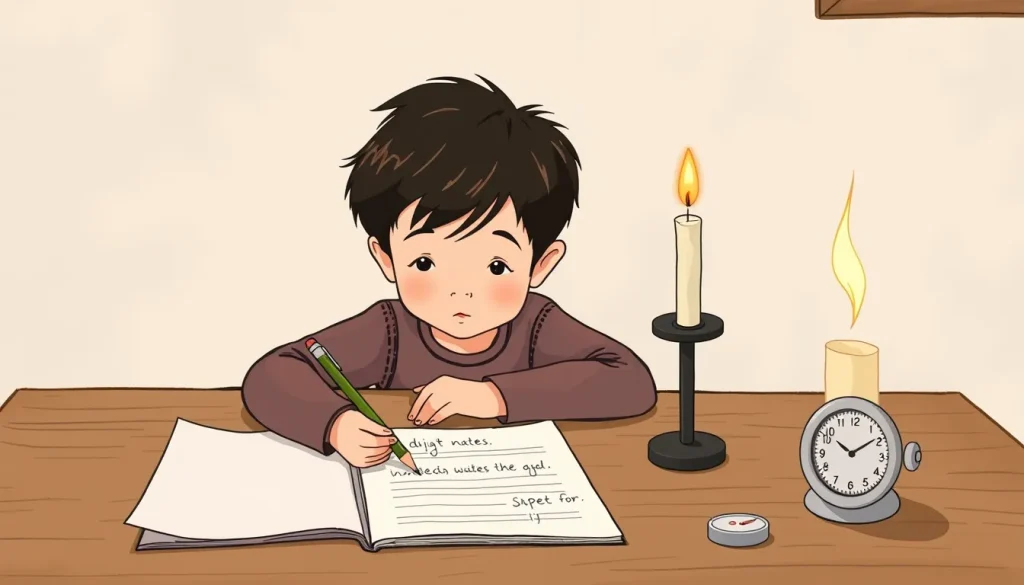
- Set a clear time frame – for example, observe a candle flame for five minutes, or watch a seed sprout once each day for two weeks.
- Explain the goal to the child: “We are going to write down exactly what we see, not what we think will happen.”
- Get consent if other people are recorded (e.g., if you video the observation). Source [2] reminds us to obtain informed consent before any audio or video recording.
Materials
- Plain paper (lined notebook pages work well)
- Pencil or pen
- Clipboard or flat surface (optional, for stability)
- Stopwatch or phone timer
- Simple observation subject (e.g., a candle, a small plant, a magnet falling, a water‑evaporation dish)
Step‑by‑Step Procedure
- Define the observation focus. Write a one‑sentence note at the top of the page: “Observing the height of a bean seedling each morning.”
- Set up the subject consistently. Place the candle on a non‑flammable plate at the same distance from the wall each time. Consistency prevents the observer from unintentionally changing conditions.
- Start the timer. Begin counting as soon as you start watching. Record the start time (e.g., 10:05 am).
- Watch without interfering. Do not touch or move the subject while you are observing. If you need to adjust lighting, do it before the timer starts.
- Write down only what you perceive. Use the objective language guidelines from CCDMD: describe colors, sounds, movements, sizes, and smells exactly as they appear. Avoid words like “probably,” “maybe,” or “I think.” For example, write “The flame is blue‑white, 3 cm tall, and flickers three times per second.”
- Record the end time. When the observation period is over, note the stop time and the total length.
- Repeat the observation. Perform the same steps at the next scheduled time (e.g., next day). Use the same paper layout and timer to keep conditions identical.
- Store the notes safely. Keep the notebook in a folder labeled with the activity name and dates. This protects the data from loss or accidental alteration.
What to Observe or Measure
Observations can be qualitative (descriptive) or quantitative (measurable). Choose the type that matches your activity:
- Qualitative example: Color of a flame, sound of a fizzing reaction, shape of a cloud forming above warm water.
- Quantitative example: Height of a sprouting seed (cm), time between magnet drops (seconds), temperature of water (°C).
Use the blank data table below to record each session. Fill in the cells during the observation – do not add numbers later.
| Date | Start Time | Duration | Qualitative Details | Quantitative Measurement | Notes / Anomalies |
|---|---|---|---|---|---|
Observation Journal Template
For longer‑term projects (e.g., plant growth), keep a separate journal page for each day. The template below can be copied onto fresh paper each time.
Date: __________   Time: __________   Weather (if relevant): __________

What I see (objective):
- Color:
- Size/Height:
- Movement/Frequency:
- Sound:
- Smell:

Measurements (if any): ______________________

Any unexpected events or changes:
_______________________________
The Science Explained: Why Objectivity Matters
Objectivity means recording only what you have directly observed with your eyes and ears, not what you assume is happening inside the subject’s mind or what you expect to happen. CCDMD explains that “bias can arise out of past experiences and can be positive or negative,” and that keeping notes objective “avoids a pre‑determined way of perceiving” the event [1]. When observers insert guesses, they create a narrative that may not match reality, making it difficult to compare data across trials.
In scientific research, consistent, objective notes are the raw evidence that later analysis builds on. If the raw data are already colored by interpretation, any conclusions drawn may be unreliable. By training children to act like a “recording machine,” you give them a skill that is foundational for all later science learning.
Common Pitfalls and How to Avoid Them
- Adding feelings or predictions. Replace “I think the flame will get taller” with “The flame is 3 cm tall.”
- Changing the set‑up between sessions. Measure distances, lighting, and temperature once and write them down before the first observation.
- Skipping the timer. Without a recorded duration, you cannot compare how fast a reaction occurs.
- Writing after the fact. Fill the table while you watch; waiting can lead to memory distortion.
Next Steps
After you have collected several observations, sit together and discuss patterns. Ask questions like “Did the flame stay the same size each time?” or “What changed when the room got warmer?” This discussion moves from raw data to interpretation, a separate step that should only happen after the observation phase is complete.
Safety and Clean‑up
Most observation activities use safe household items, but always supervise younger children around open flames, hot water, or sharp objects. When the session ends, turn off any heat sources, store materials out of reach, and keep the notebook in a dry place.
Related terms
- Observation
- A systematic way of watching and recording what happens in a natural or controlled setting.
- Bias
- A pre‑existing belief or expectation that can influence how information is recorded or interpreted.
- Variable
- Anything that can change; in observation you keep variables constant to see true patterns.
Sources & references
- Objectivity - Infants & Toddlers - CCDMD, https://toddlers.ccdmd.qc.ca/observing/objectivity
- Taking notes and recording user research sessions - GOV.UK, https://www.gov.uk/service-manual/user-research/taking-notes-and-recording-user-research-sessions
- Writing Field Notes - USC Libraries, https://libguides.usc.edu/writingguide/assignments/fieldnotes