Overview
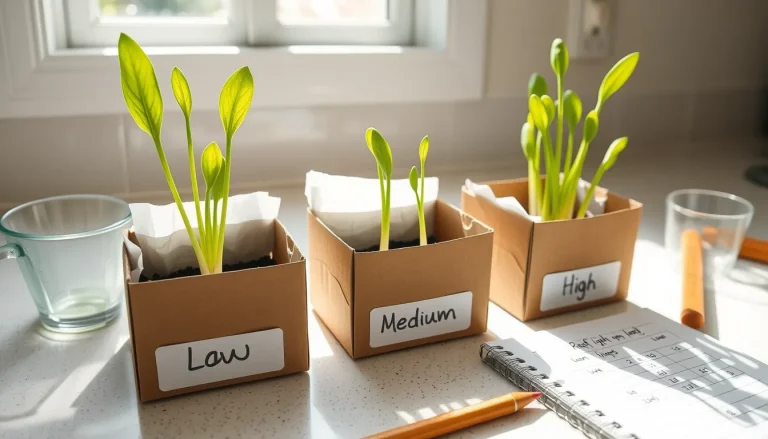
Seeds of different plant species often break dormancy at different speeds. Even seeds of the same species can sprout on different days – a strategy called “bet‑hedging” that helps plants survive unpredictable environments [1]. This experiment lets children observe that natural variation directly, compare three common seeds, and practice scientific recording.
Before You Begin
- Choose a well‑ventilated, brightly lit area where the experiment can sit undisturbed for 7–14 days.
- Gather a clean workspace, such as a kitchen table covered with newspaper.
- Adults should supervise handling of hot water and cleaning up any spills.
Materials
- Three seed varieties (e.g., pinto beans, green peas, and sweet corn kernels). Use fresh, untreated seeds for best results.
- Paper towels (or unbleached kitchen paper) – 6 sheets, cut to 10 cm × 15 cm.
- Two shallow plastic trays or disposable plates (to hold the moist towels).
- Distilled or tap water at room temperature.
- Permanent marker for labeling.
- Ruler (optional, for measuring root length later).
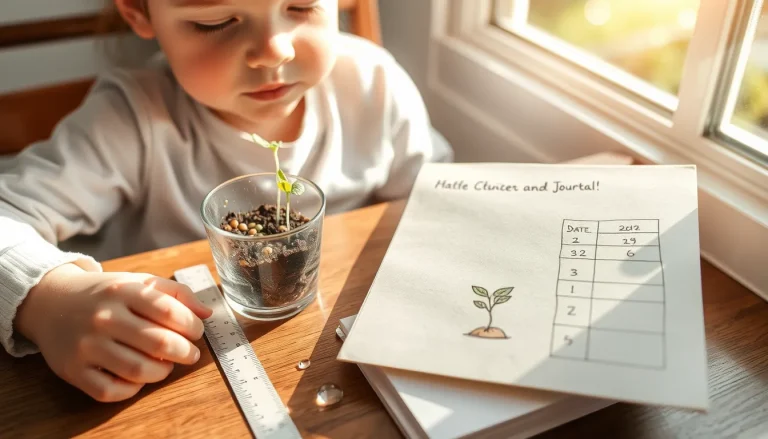
- Notebook or printed data sheet (see the blank table below).
Steps
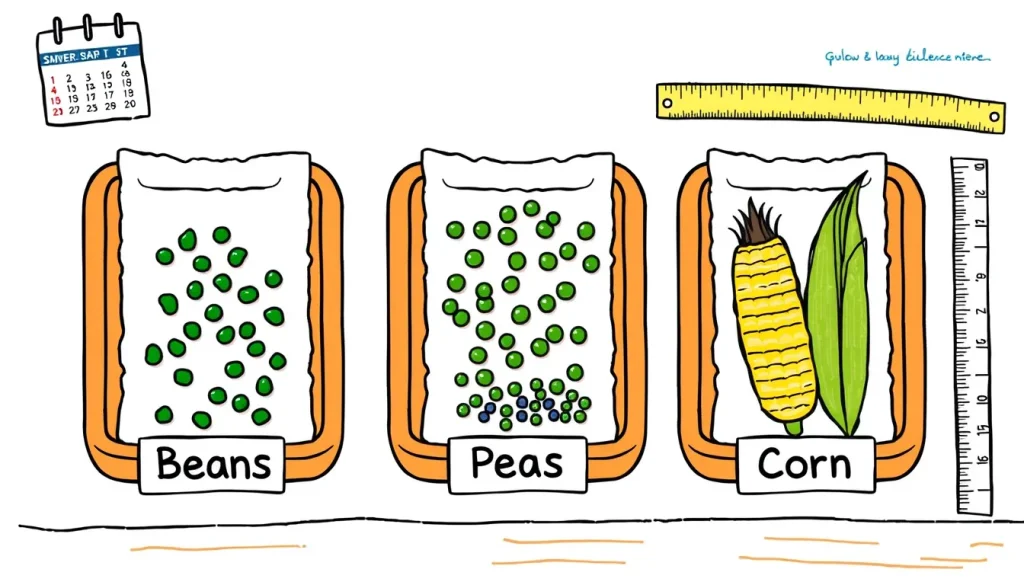
- Label the trays. Write the seed name on each tray: “Beans,” “Peas,” and “Corn.”
- Prepare the paper towels. Place two sheets of towel in each tray, overlapping slightly so the surface is continuous.
- Moisten the towels. Using a spray bottle or a cup, evenly dampen each towel until it is wet but not dripping. The towel should be supple and darkened.
- Place the seeds. Arrange 10 seeds of the same type in a single row on each towel, leaving about 1 cm between seeds.
- Cover (optional). If you live in a dry climate, loosely cover each tray with another damp towel to keep humidity high.
- Record Day 0. Note the date, temperature of the room, and any observations (e.g., towels are moist, seeds look dry).
- Check daily. Each morning, look for the emergence of the radicle (the first tiny root). Record the day each seed sprouts. Re‑moisten towels if they begin to dry.
- Continue for 14 days. Most common garden seeds germinate within this window. Record any seeds that never sprout.
- Clean up. After the observation period, discard used towels in the compost (if possible) and wash trays with soap and water.
What to Observe or Measure
- Germination day. The calendar day on which the radicle first becomes visible.
- Germination percentage. Number of seeds that germinated ÷ total seeds × 100 %.
- Root length (optional). Using a ruler, measure the length of the first root after 7 days.
Testable Question
“Do pinto beans, green peas, and sweet corn kernels germinate at the same rate under identical conditions?”
Hypothesis
Because each species has different innate water‑uptake and metabolic rates, we predict that the seeds will not all sprout on the same day. For example, beans may germinate faster than corn.
Variables and Controls
| Element | Description |
|---|---|
| Independent variable | Seed type (bean, pea, corn) |
| Dependent variable | Day of germination (and germination %) |
| Controlled variables | Moisture level, temperature, light exposure, number of seeds per tray, towel type, water source |
| Control group | Not needed – each seed type serves as a comparison group under the same conditions. |
Repeated Trials
To see how much natural variation exists, repeat the whole set (all three seed types) at least two more times on different weeks. Each repeat is a “trial.” Consistent results across trials strengthen the conclusion.
Data Table (blank for recording)
| Trial | Seed Type | Seed # | Day Germinated | Root Length (mm) – optional |
|---|
Graphing Your Results
After data collection, create a simple bar chart:
- X‑axis: Seed type (Beans, Peas, Corn).
- Y‑axis: Average germination day (or % germinated).
- Each bar shows the mean of the three trials. Error bars can represent the range of days observed.
Bar charts make it easy to see which seed sprouts earliest and whether differences are large.
Troubleshooting
- Seeds stay dry. Re‑wet the towels; they should feel moist but not soggy.
- No germination after 7 days. Check room temperature – most seeds need 18‑24 °C. If it’s cooler, move the trays to a warmer spot (e.g., near a sunny window).
- Mold appears. Reduce excess water and increase air circulation. Remove any affected seeds.
Try Another Version
Once the basic experiment is complete, children can explore one of these extensions:
- Test the effect of light by covering one tray with aluminum foil.
- Compare germination after a cold‑stratification period (place seeds in the fridge for 48 h before starting).
- Use a wider variety of seeds – sunflower, radish, wheat – to see how size and seed coat thickness influence speed.
Cleanup and Disposal
- Discard used paper towels in compost or trash.
- Rinse trays with warm, soapy water and let them dry.
- Wash hands after handling seeds and water.
Next Steps
Discuss the concept of “bet‑hedging” with kids: why plants produce some fast‑germinating seeds and some slower ones to survive unpredictable weather [1]. Connect the experiment to real‑world agriculture, where uniform germination is prized, and to conservation, where variability can be a survival advantage.
Sources & references
- Seed germination variability: why do genetically identical seeds not germinate at the same time? Journal of Experimental Botany, 2023. https://doi.org/10.1093/jxb/erad101