Overview
Plants need three basic things to start growing: water, a suitable temperature, and the right light conditions. This experiment lets children see how the presence or absence of light changes the speed and size of bean seedlings. The activity uses only common household items, so families can set it up in a kitchen or classroom.
Testable Question
Does light affect the rate of germination and early shoot growth of bean seeds compared with darkness?
Hypothesis
Because light triggers photosynthesis and influences the plant hormone pathways that control stem elongation, the hypothesis is that beans kept in light will sprout sooner and produce longer shoots than beans kept in the dark.
Materials
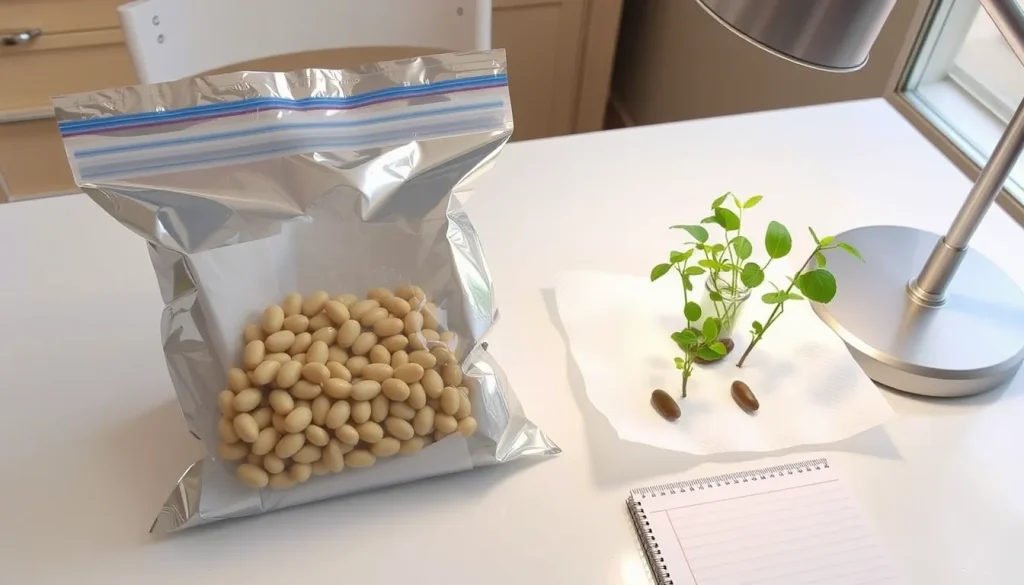
- Dry bean seeds (pinto or lima beans work well) – about 20 seeds
- Paper towels (thin, absorbent) – 2 sheets
- Two resealable Ziploc bags (medium size)
- Aluminum foil (to block light completely)
- Desk lamp or any steady light source (≈ 40–60 lux at seed level)
- Ruler (centimetre scale)
- Marker and notebook for recording data
- Water at room temperature
All of these items are typically found at home or in a school supply cupboard.

Variables and Controls
- Independent variable: Light condition – one group receives light, the other is kept in total darkness.
- Dependent variables: (a) Number of seeds that germinate each day, (b) Length of the shoot (stem) after a set number of days (e.g., 7 days).
- Controlled variables (kept the same for both groups):
- Bean variety and seed size
- Amount of water added to each paper towel
- Temperature of the room (aim for 20‑25 °C)
- Size of the Ziploc bag and amount of paper towel used
- Observation schedule (same times each day)
Procedure
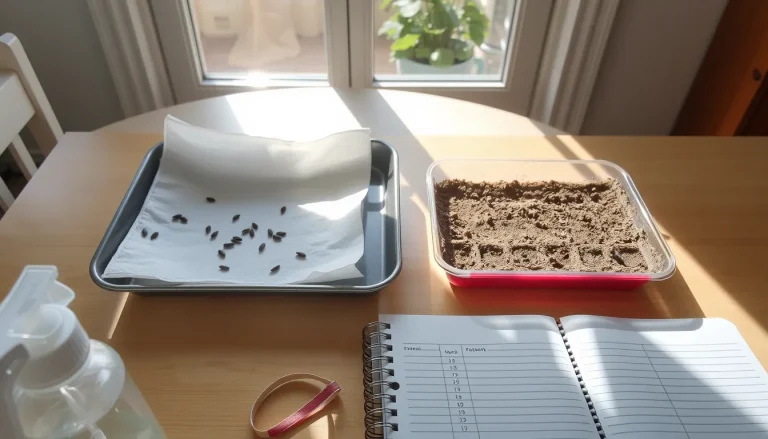
- Moisten each paper towel with water until it is fully damp but not dripping. Squeeze out excess water so the towel is just wet.
- Place one damp towel inside each Ziploc bag, spreading it flat against the bottom.
- Arrange 10 bean seeds on the damp towel in each bag, spacing them evenly.
- Close each bag about three‑quarters of the way so air can circulate but moisture stays inside.
- Wrap one bag completely in a sheet of aluminum foil to create a dark environment. Leave the other bag uncovered.
- Make sure the foil covers the entire bag and any seams where light could sneak in.
- Place both bags side‑by‑side under the desk lamp, about 10 cm away, so the uncovered bag receives steady light while the foil‑wrapped bag stays dark.
- Start a daily observation log. Each morning record:
- How many seeds have shown a visible root or shoot (germinated).
- If a shoot is visible, measure its length with the ruler (to the nearest millimetre).
- Continue observations for at least 7 days, or until most seeds have germinated.
- At the end of the experiment, compare the total number of germinated seeds and the average shoot length between the light and dark groups.
This method follows a USDA ARS classroom activity that uses the same basic set‑up source.
Repeated Trials
To increase confidence in the results, repeat the entire set‑up two more times (for a total of three independent trials). Use fresh seeds and fresh paper towels each time, and record each trial’s data separately.
What to Observe and Measure
- Germination day: The first day a seed shows a tiny root (radicle) or shoot (plumule).
- Shoot length: Measured from the seed coat to the tip of the green shoot.
- Qualitative notes: Colour of the shoot, any signs of wilting, and whether the seed appears dry.
Data Table
| Trial | Condition | Seed # | Germination Day | Shoot Length (mm) on Day 7 |
|---|---|---|---|---|
| 1 | Light | 1 | ||
| 1 | Light | 2 | ||
| 1 | Dark | 1 | ||
| 1 | Dark | 2 |
Graphing Your Results
Two simple graphs work well:
- Bar chart of germination percentage: X‑axis = Light vs Dark, Y‑axis = % of seeds germinated after 7 days.
- Bar chart of average shoot length: X‑axis = Light vs Dark, Y‑axis = mean shoot length (mm).
Bar charts make it easy to see which condition produced more and taller seedlings.
The Science Explained
Light is a key environmental cue for plants. When a seed senses light, photoreceptor proteins (phytochromes) trigger a cascade that promotes chlorophyll production and stem elongation—a process called photomorphogenesis. In darkness, seedlings often exhibit “etiolation,” growing long, pale stems as they search for light. Beans are “photoblastic” – they germinate faster when exposed to light, though some can sprout in total darkness. By comparing light‑exposed and dark‑kept beans, children observe these natural responses directly.
All seeds still need water to swell and break their protective coat; the experiment keeps water constant for both groups, so any differences can be attributed to light.
Troubleshooting
- Seeds do not germinate: Check that the paper towels are truly moist, not dry. If the room is too cool (< 15 °C), germination slows; move the bags to a warmer spot.
- Dark bag gets light leaks: Ensure the foil fully covers the bag and that no gaps exist near the zip. Even a small light leak can alter results.
- Mold appears on the towel: Use only enough water to keep the towel damp, not soggy. Replace the towel if it becomes slimy.
Next Steps
After the initial experiment, children can explore extensions such as:
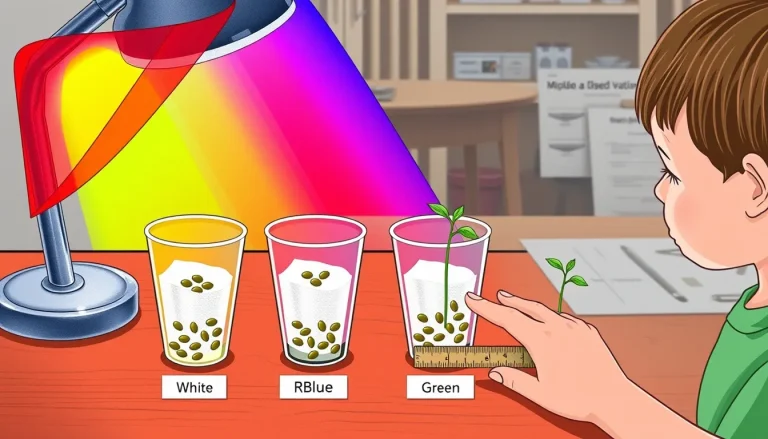
- Varying the light intensity (e.g., using a brighter desk lamp or a shaded area).
- Testing different seed types (e.g., corn, radish) to see if the light response is universal.
- Adding a third condition with intermittent light (12 h on / 12 h off) to mimic day–night cycles.
These follow‑up activities deepen understanding of how plants adapt to their environment.
Related terms
- Germination
- The process by which a seed absorbs water, swells, and begins to grow a root and shoot.
- Photomorphogenesis
- Growth and development changes in plants that are triggered by light.