Orientation
Many people wonder whether a favorite song can help a seedling grow taller or produce more leaves. Scientific studies have reported measurable changes in plant physiology when exposed to sound waves of specific frequencies and intensities [1][2][3][4]. This activity lets children investigate the question themselves using inexpensive, everyday materials. By the end of the experiment they will be able to record growth data, draw a simple graph, and explain how vibration can influence plant processes.
Before you begin
- Choose a quiet room where the music can be played without interruption for several weeks.
- Gather an adult to help with cutting, measuring, and setting up the audio equipment.
- Plan for a minimum observation period of three weeks; most fast‑growing vegetables (e.g., radish, lettuce, bok choy) show visible differences within that time.
- Write down the start date, the type of music you will use, and the exact time each day that the music will play.
Materials
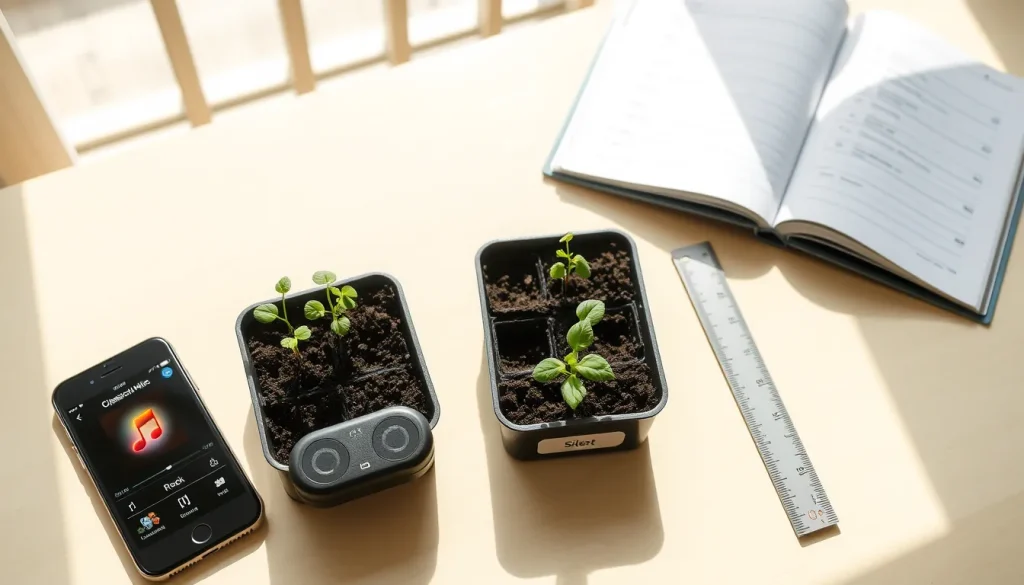
- Three identical planting trays (plastic or shallow cardboard).
- Potting mix or seed‑starting mix (about 2 L per tray).
- Fast‑growing seeds such as radish, lettuce, or bok choy (≈20 seeds per tray).
- Three small waterproof speakers or Bluetooth‑enabled earbuds placed in waterproof pouches.
- Smartphone, tablet, or MP3 player with volume control.
- Two playlists: one of classical music (e.g., Mozart, Beethoven) and one of rock music (e.g., electric guitar, drums). Each playlist should be at least 30 minutes long.
- Measuring ruler or metric tape (cm).
- Label stickers or masking tape and a permanent marker.
- Notebook or printed observation journal (see “What to observe or measure”).
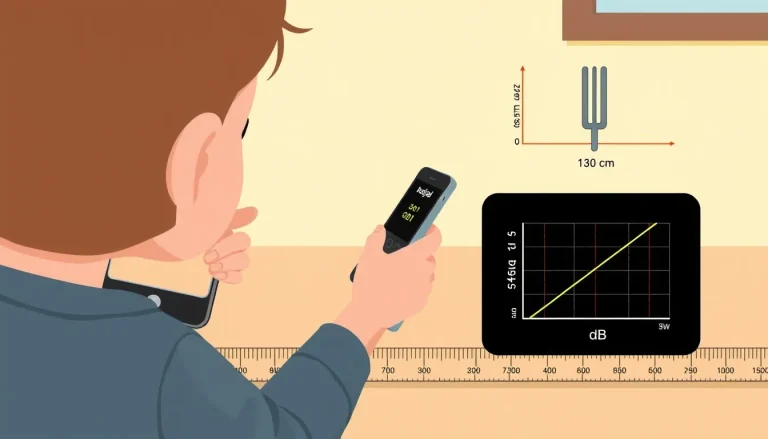
- Optional: a decibel‑meter app to record sound level (aim for 60–70 dB, similar to normal conversation).
Steps
- Prepare the trays. Fill each tray with the same depth of potting mix (e.g., 5 cm). Level the surface gently.
- Sow the seeds. Scatter 20 seeds evenly across each tray, then cover with a thin layer of soil (≈1 cm). Lightly press the soil to ensure good seed‑soil contact.
- Label the trays. Mark one “Classical,” one “Rock,” and one “Silent” (no music). Attach the label to the side of the tray.
- Set up the speakers. Place a waterproof speaker at the edge of each music tray, about 10 cm above the soil. Ensure the speaker does not touch the plants.
- Program the music schedule. Using a timer app or a manual alarm, play the selected playlist for 30 minutes each day, at the same time (e.g., 9 am). Keep the volume steady; if you have a decibel app, record the level (target 60–70 dB).
- Silent control. The third tray receives no music. Keep it in the same room, under the same light and temperature conditions.
- Water consistently. Water all three trays with the same amount of water (e.g., 50 ml) once per day, preferably in the evening. Use a measuring cup to keep the volume identical.
- Record daily. Each day measure the height of the tallest seedling in each tray (from soil surface to tip of the newest leaf) and note any visible differences (leaf number, color, leaf size).
- Repeat for three weeks. Continue the daily music exposure and measurements for at least 21 days.
- Analyze. At the end of the period, calculate the average height for each tray, plot the data, and compare the music groups to the silent control.
What to observe or measure
- Quantitative: Seedling height (cm) recorded each day; optionally leaf count per plant.
- Qualitative: Leaf color (green, yellowing), leaf shape, any signs of stress (wilting, stunted growth).
- Use the data table below to log daily measurements.
Data table
| Date | Classical Height (cm) | Rock Height (cm) | Silent Height (cm) |
|---|---|---|---|
| Day 1 | |||
| Day 2 | |||
| … | |||
| Day 21 |
The science explained
Plants sense mechanical vibrations much like animals sense sound. When a sound wave reaches a leaf or stem, the tiny cells vibrate at the wave’s frequency. Research has shown that certain frequencies can alter the opening of stomata (tiny pores for gas exchange), stimulate enzyme activity, and even affect the expression of growth‑related genes [1][2]. In the studies cited, exposure to classical music (often rich in low‑frequency tones) increased leaf size and total biomass, whereas louder, high‑frequency rock music sometimes produced stress responses such as reduced leaf area [2][3]. The effect is not magical; it depends on:
- Frequency range. Most plant‑responsive studies use 100 Hz–5 kHz, which overlaps the audible range for humans.
- Sound intensity. Too loud (above ~80 dB) can damage plant tissues, while too soft (<40 dB) may be negligible.
- Duration and regularity. Consistent daily exposure for minutes to hours is more effective than a single long burst.
By measuring growth under controlled conditions, children can see how a physical stimulus (vibration) can influence a biological process (cell division and elongation).
Testable question
Does daily exposure to classical music increase the average height of radish seedlings compared with rock music and with no music?

Hypothesis
If seedlings are played classical music for 30 minutes each day, then they will grow taller (higher average height) than seedlings exposed to rock music or to silence, because low‑frequency, harmonious sound has been reported to promote cell expansion [1][2].
Variables and controls
- Independent variable: Type of acoustic stimulus (classical, rock, silent).
- Dependent variable: Average seedling height after 21 days (cm).
- Controlled variables: Seed species, seed quantity, soil type, watering volume, light exposure, room temperature, speaker distance, and sound level (keep all music at 60–70 dB).
- Control group: The “Silent” tray provides a baseline with no acoustic input.
Repeated trials
To reduce random variation, repeat the whole experiment at least once with a new set of seeds. Each repeat is a “trial.” Comparing the results of two or three trials helps distinguish a real effect from day‑to‑day fluctuations.
Graphing your results
Create a simple bar graph:
- X‑axis: Treatment (Classical, Rock, Silent).
- Y‑axis: Mean final height (cm).
- Each bar should include an error line showing the standard deviation of the three daily measurements taken on the final day.
Bar graphs make it easy to see which treatment produced the tallest average plants.
Troubleshooting
- Music is too loud or too soft. Use a decibel app; adjust volume until the reading is between 60 and 70 dB.
- Plants are not germinating. Verify seed freshness, keep soil moist but not waterlogged, and ensure the room receives at least 6 hours of indirect light.
- Unequal watering. Measure water with a cup each time; consider using a small squeeze bottle for consistency.
- Speaker placement varies. Mark the speaker spot on each tray with a small piece of tape so the distance stays constant.
Try another version
Older children can explore how changing the frequency alone affects growth. Use a tone generator app to play a pure sine wave at 250 Hz, 1 kHz, and 4 kHz (each at 65 dB) for 30 minutes daily. Compare the results to the music playlists to see whether a single frequency has a stronger or weaker effect than complex musical sound.
Next steps
After completing the experiment, discuss with the children how the data support or refute the hypothesis. Encourage them to write a short report that includes the question, hypothesis, method, data table, graph, and a conclusion that mentions possible reasons for any differences observed. This report can be the basis for a classroom presentation or a science‑fair entry.
Related terms
- Frequency
- The number of sound wave cycles that occur each second, measured in hertz (Hz).
- Decibel
- A unit that describes the intensity (loudness) of sound; 60–70 dB is similar to normal conversation.
- Control group
- A set of plants that are kept under the same conditions except for the variable being tested, used for comparison.
- Hypothesis
- A testable prediction about what will happen in an experiment.
Sources & references
- Pagano, M., & Del Prete, S. (2024). Symphonies of Growth: Unveiling the Impact of Sound Waves on Plant Physiology and Productivity. Biology, 13(5), 326. https://pmc.ncbi.nlm.nih.gov/articles/PMC11117645/
- Yeoh, J. P. S., Zhang, Z., Sinniah, U. R., Spence, C. J., & Beh, W. F. (2024). Music for Plants? An Investigation into the Impact of Exposure to Acoustic Stimulus in Bok Choy (Brassica rapa) Plants. Evolutionary Studies in Imaginative Culture. https://doi.org/10.70082/esiculture.vi.677
- Prasetyo, J., & Raju, (2021). Effect of violin sound exposure with pressure level variation to green mustard (Brassica juncea L.). IOP Conference Series: Earth and Environmental Science. https://beta.iopscience.iop.org/article/10.1088/1755-1315/782/2/022071/pdf
- Hendrawan, Y., Rizky, A., Susilo, B., Prasetyo, J., & Damayanti, R. (2020). The Effect of Javanese Gamelan Music on the Growth of Chinese Broccoli. Pertanika Journal of Science & Technology, 28(1), 69‑90. http://www.pertanika.upm.edu.my/resources/files/PertanikaPAPERS/JSTVol.28(1)Jan.2020/05JST-1745-2019.pdf